How to Choose the Right Tunnel Freezer for Your Food Processing Plant
You need to pick a tunnel freezer that fits your product, how much you make, and how you work. This helps keep food safe and good to eat. The kind of food you freeze, like seafood, whole fish, or fillets, changes what machine you need. Some freezing ways are better for some foods. For example:
Some ways freeze food faster and keep more water inside.
Good airflow makes smaller ice crystals, so food tastes fresh after thawing.
Machines like conveyors and temperature sensors keep food cold and safe, and people do not have to touch it as much.
If food is the same thickness and spaced out, it freezes evenly and keeps its texture.
Smart choices help your plant work well and keep food safe.
Key Takeaways
Pick a tunnel freezer that matches the food you freeze. Some foods, like whole fish or fillets, need special designs. These designs help freeze food the best way.
Make sure the freezer has good airflow. Good airflow makes smaller ice crystals. This keeps food texture and taste better after thawing.
Find freezers that are easy to clean. Stainless steel frames and quick-release belts help stop germs. They also make cleaning and fixing easier.
Think about automation features. Sensors and recipe controls help freeze food better. They also lower labor costs and make work faster.
Check how much energy the freezer uses. Choose models with smart fans and strong insulation. This saves money on energy bills and lowers costs.
Tunnel Freezers in Food Processing
What Is a Tunnel Freezer?
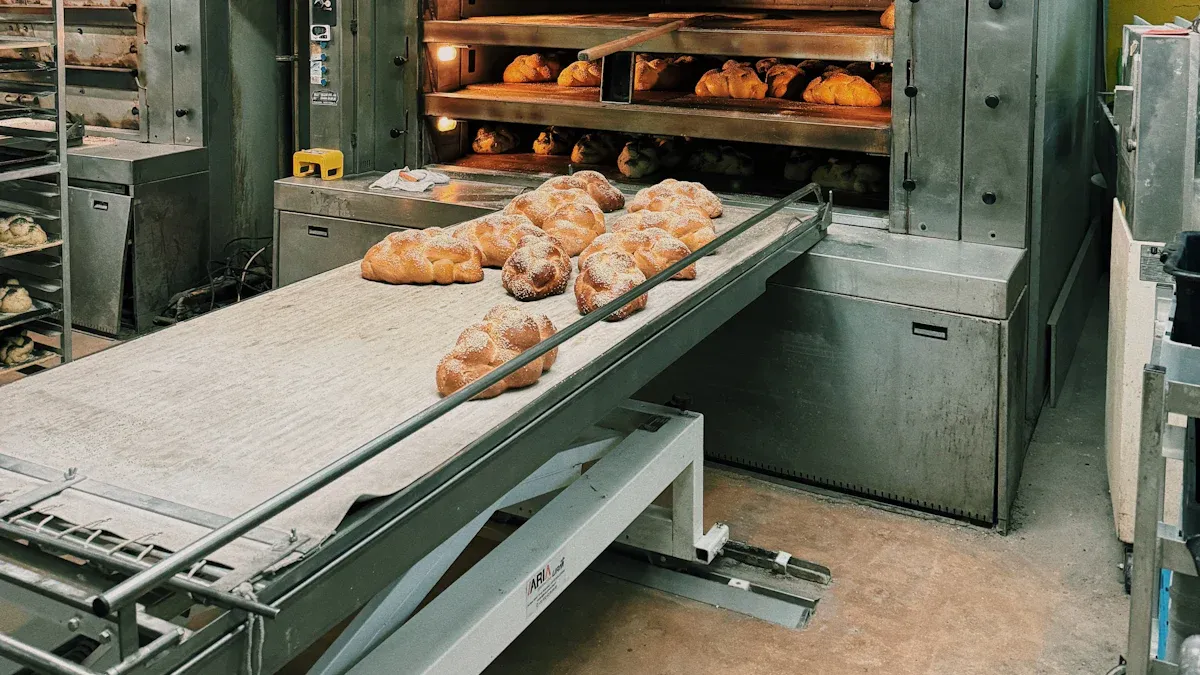
Tunnel freezers are used in many food plants. These machines freeze lots of food very fast. Cold air moves quickly inside a long, insulated space. Food goes on a conveyor belt. The belt takes food through the tunnel. Cold air blows on the food and freezes it evenly. This works well for fish, fillets, and seafood. Conveyor-based tunnel freezers freeze flat, even foods. Cleaning is simple because the design is not complicated.
Here is a table that shows the main type of tunnel freezer used in food processing:
Type of Tunnel Freezer | Characteristics | Advantages | Applications |
|---|---|---|---|
Conveyor-based Tunnel Freezers | High-speed cold air, insulated chamber | Quick, even freezing, easy cleaning | Flat, uniform food products |
Role in High-Capacity Operations
Tunnel freezers are needed to freeze lots of food at once. Tunnel air blast freezers are best for big food jobs. These freezers move food through a long space while cold air blows on it. You can change the airflow for thick or thin food. Strong fans lower the temperature from +20 °C to –18 °C in minutes. You can freeze different foods one after another with little waiting. The straight conveyor is easy to clean and connect to other machines.
Tip: Pick tunnel freezers made from strong stainless steel. This metal lasts longer and is easier to take care of.
Here is a table that explains how tunnel air blast freezers work:
Feature | Description |
|---|---|
Operation | Moves food through a long, insulated enclosure with cold air blowing across |
Modular Design | Fits into production lines with different belt widths and lengths |
Temperature Reduction | Fans drop food temperature quickly |
Adjustable Airflow | Ducts match freezing rates to product thickness |
Flexibility | Runs different foods with minimal downtime |
Cleaning and Integration | Straight conveyor design for easy cleaning and connection |
Tunnel freezers help keep food safe and fresh. You get fast freezing, even results, and easy cleaning. These machines help big food plants work better.
Matching Tunnel Freezer to Product Needs
Seafood and IQF Fish Processing Equipment
You need a tunnel freezer that fits your seafood. Whole fish need strong conveyors and wide tunnels. These help move heavy fish safely. Fillets need fine mesh belts. These belts protect soft fish and stop drips. Good temperature control and glazing systems keep fish looking nice.
Using iqf fish processing equipment helps freeze seafood better. The table below lists features and their benefits:
Feature | Benefit |
|---|---|
Spiral freezers | Easy to clean and strong airflow for even freezing |
Precise temperature control | Keeps seafood close to natural state and smooth production |
Avoids clumping | Makes portioning and packaging easier, keeps freshness and texture |
Preserves cell structure | Keeps firm texture and taste after thawing, less drip loss |
Variable-speed fans | Changes airflow and belt speed for different thicknesses, ensures even freezing |
Picking the right iqf fish processing equipment makes food better. Individual quick freezing keeps fish apart and stops clumping. You keep fish fresh and tasty after thawing. You also waste less and pack food easier.
Conveyor and Airflow Design Considerations
You need to think about conveyor and airflow design. Fish that are the same size and thickness freeze better. You should leave 5–10 millimeters between each item. This space lets air move well and stops cold spots. You get even freezing and keep food fresh.
Controlled airflow is important for freezing. It makes small, even ice crystals. These crystals protect cells and keep food good after thawing. Managing temperature helps stop germs and oxidation. This means food lasts longer and looks better.
Tip: Change belt speed and time for each fish type. You freeze food evenly and waste less.
Iqf fish processing equipment helps with conveyor and airflow design. It keeps fish apart and fresh. You protect food quality and freshness while freezing.
Optimizing Freezing Speed and Efficiency
You need to freeze food fast and well to keep it fresh. Airflow design spreads cold evenly. This stops big ice crystals that hurt texture. Controlled airflow cools food quickly. You stop germs and keep food fresh.
Blasting air at 10–12 meters per second makes small ice crystals. This protects cells and keeps texture after thawing. Iqf fish and iqf strawberry processing equipment let you change airflow and belt speed. You match freezing speed to food thickness and type.
Individual quick freezing keeps fish apart. You stop clumping and keep food fresh. You make every batch better and fresher.
Note: You save energy and money by setting airflow and temperature right. You keep food safe and fresh and run your plant well.
Choosing the right tunnel freezer and iqf fish processing equipment helps your product. You make food better, waste less, and keep your plant working smoothly.
Comparing Tunnel Freezer Technologies
IQF vs. Other Freezing Methods
It is important to know how iqf works compared to other fast freezing machines. IQF means Individual Quick Freezing. This method uses cold air to freeze each piece of food by itself. It works for things like fish fillets or berries. IQF keeps food from sticking together and helps keep its texture. Other ways to freeze food are plate freezers and cryogenic systems. Plate freezers press food between cold plates. Cryogenic freezers use special gases like nitrogen to freeze food quickly.
Here is a table that shows how iqf and other freezing methods are different:
Feature | IQF Systems | Alternative Freezing Methods |
|---|---|---|
Uses smart fans and insulation to save energy | Energy use changes with each type | |
Automation | Automated controls help lower downtime | Often needs more work by people |
Maintenance | Regular care keeps the system working well | Maintenance can be very different |
IQF saves energy because it uses smart fans and good insulation. Automated controls mean less time fixing things. Other freezing machines may need more work and use more energy. If you want to spend less, check what refrigerant you use. Ammonia works well with mechanical systems. Cryogenic freezers are cheaper to set up but use more gas over time.
Tip: Pick iqf if you want better food quality, less sticking, and good texture for fish and other foods.
You should choose the freezing method that fits your food and your plant’s needs. IQF is best for small foods like fish pieces, shrimp, or berries. Plate freezers are good for blocks of food. Cryogenic systems freeze food fast but can cost more to run.
Innovative Solutions (Liquid Ice, Ozone)
New freezing technology can help make food safer and better. Liquid ice systems use very cold water to freeze fish quickly. This keeps water inside and protects the food’s cells. You get firm texture and less liquid loss when thawing. Ozone technology helps clean food and machines. Ozone kills germs and lowers the chance of contamination.
Liquid ice is good for soft fish and seafood.
Ozone helps keep tunnel freezers clean and safe.
You keep food fresh and make it last longer.
Look for freezing machines that use these new ideas together. You get faster freezing, safer food, and better results. You also follow strict food safety rules.
Note: New freezing technology helps you keep food fresh and safe. You can freeze fish and seafood quickly and keep high quality.
Integration with Existing Lines
You need to make sure new tunnel freezers fit into your current line. This step changes how your plant works and how much food you can make. Tunnel freezers help freeze lots of food without stopping. You can process many fish fillets or shrimp with little waiting. Automation keeps food moving and means less work for people.
Here is a table that compares spiral freezers and tunnel freezers for fitting into your plant:
Aspect | Spiral Freezers | Tunnel Freezers |
|---|---|---|
Freezing | Gentle freezing with small ice crystals | Fast freezing, sometimes uneven inside |
Handling | Less touching, good for soft foods | Needs shaking or space to stop sticking |
Yield | Keeps more water and weight | May lose water unless changed |
Capacity | Saves space by stacking up | Handles lots of food at once |
Energy Efficiency | Smart fans, insulation, automatic defrost | Needs good airflow control |
Hygiene Standards | Stainless steel, smooth welds, cleaning systems | Must be cleaned well to stop germs |
Product Type & Objectives | Match freezer to seafood and goals | Think about line flow and space |
You can change belt size to fit your plant. Strong fans cool food quickly. You can switch between foods like fish or berries fast. You keep food quality high and waste less.
Tip: Plan how you add new freezers to match your food, space, and goals. You get better workflow and higher efficiency.
Tunnel freezers help you freeze food quickly and keep it good. You make your plant work better and more flexible. You can freeze many kinds of food with fast machines and get the same good results every time.
Food Safety and Operational Efficiency
Hygiene and Compliance
You need to keep your plant very clean. Tunnel freezer design helps you follow food safety rules. Stainless steel frames and smooth welds stop bacteria from hiding. Quick-release belts and open spaces make cleaning simple. This lowers the risk of germs and keeps food safe. The table below shows how tunnel freezers help with hygiene and food safety:
Feature | Description |
|---|---|
Material | Stainless steel frames with smooth welds |
Compliance | Meets HACCP and BRC standards |
Cleaning Features | Quick-release belts and open access zones for easy cleaning |
Contamination Risk | Lowered due to design facilitating full cleaning within short downtimes |
You keep food fresh and good by following hygiene rules. Open-frame stainless steel and sloped bedplates help you clean every spot. Tool-free belt removal and CIP manifolds let you clean with high pressure. These features help you follow HACCP and keep fish and other food safe.
Automation and Monitoring
Automation makes freezing food more reliable. You use variable-speed fans and PLC controls for exact temperature. Sensors show real-time temperature and belt speed. Recipe control systems let you change belt speed, air temperature, and freezing time for each food. Automated conveyors move food and cut down on handling. Data logging and remote monitoring help you check maintenance and food quality. You keep food fresh and safe and make sure every batch meets safety rules.
Variable-speed fans and PLC control work for different food thicknesses.
Sensors give real-time feedback for the best freezing.
Recipe control changes belt speed, air temperature, and freezing time.
Data logging helps you track and plan maintenance.
Automated conveyors keep food moving and use less labor.
Automation keeps temperature steady and freezes food evenly. You save work and make food quality and freshness better.
Cost of Ownership and Support
You need to think about total cost when picking a tunnel freezer. Regular maintenance lowers costs and stops long breaks. Automation can save on labor but may cost more at first. Energy-saving and good refrigeration features help you save money over time. The table below lists important things that affect cost:
Factor | Description |
|---|---|
Maintenance | Regular upkeep reduces long-term costs and downtime. |
Labor | Automation can reduce labor costs but may increase initial expenses. |
Energy Costs | Energy-efficient systems lower operational costs over time. |
Initial Equipment Price | The upfront cost of the freezer impacts the total investment. |
Production Capacity | Larger systems require more robust components, increasing costs. |
Freezer Type | Different types have varying complexities affecting energy efficiency and costs. |
Automation Level | Higher automation can improve efficiency but adds to initial costs. |
Material and Construction | Using high-quality materials can increase initial costs but reduce maintenance needs. |
You keep food fresh, safe, and spend less by picking the right freezer and support plan. You protect fish and other food while meeting your plant’s needs.
Decision Checklist
Key Criteria for Selection
You need to look at several important points before you choose a tunnel freezer. Use this checklist to guide your decision:
Product Type and Size
Think about what you freeze most. Whole fish, fillets, or shrimp need different belt types and airflow.Freezing Capacity
Check how much food you need to freeze each hour. Pick a freezer that matches your daily output.Freezing Speed and Quality
Look for systems with strong airflow and fast cooling. This keeps food fresh and safe.Hygiene and Cleaning
Choose stainless steel machines with easy-to-clean belts and open frames. You lower the risk of germs.Automation and Controls
Find freezers with sensors, recipe controls, and data logging. These features help you save labor and keep quality high.Energy Efficiency
Select models with smart fans and good insulation. You save money on energy bills.Integration with Your Line
Make sure the freezer fits your space and works with your other machines.Support and Maintenance
Ask about after-sales support and spare parts. Good service keeps your plant running.
Tip: Write down your needs and compare them with each freezer’s features. This helps you pick the best match.
Common Pitfalls to Avoid
You can avoid many problems by watching for these common mistakes:
Ignoring Product Differences
Do not use the same freezer for all foods. Each product needs special care.Overlooking Cleaning Needs
Hard-to-clean machines can cause food safety issues.Underestimating Capacity
Small freezers slow your line and waste time.Skipping Automation
Manual systems need more labor and can lead to mistakes.Forgetting About Support
No service means long downtimes if something breaks.
Pitfall | Why It Matters |
|---|---|
Wrong freezer type | Poor quality and wasted product |
Poor cleaning design | Higher risk of contamination |
Low capacity | Missed production targets |
No automation | More errors and higher labor costs |
No support | Longer downtime and lost profits |
Note: Take your time. Ask questions. Test machines if you can. Careful planning helps you get the right tunnel freezer for your plant.
You should think about keeping food fresh when picking a tunnel freezer. First, match the freezer to your food and how much you need to freeze. Use a checklist to look at different machines and make sure each batch stays fresh. Ask people who know a lot about seafood for help so you protect freshness. Check how air moves and how machines work by themselves to help keep food fresh. The right freezer helps you save money, follow safety rules, and keep food fresh.
Tip: Ask suppliers for tips on how to keep food fresh in your plant.
FAQ
What is the main benefit of using a tunnel freezer?
You freeze large amounts of food quickly. Tunnel freezers help you keep food fresh and safe. You get even results and save time. These machines work well for seafood, fish fillets, and other products.
How do I know which tunnel freezer fits my product?
You look at your product’s size, shape, and type. Whole fish need strong conveyors. Fillets need fine mesh belts. You match the freezer’s airflow and belt design to your food for the best results.
Can I clean a tunnel freezer easily?
You clean tunnel freezers quickly. Stainless steel frames and open designs help you reach every spot. Quick-release belts make cleaning simple. You lower the risk of germs and keep your plant safe.
Does automation help with freezing quality?
You use automation to control temperature and airflow. Sensors and recipe controls help you freeze food evenly. Automated conveyors move food with less handling. You get better quality and save labor.
What should I ask suppliers before buying?
You ask about freezer capacity, cleaning features, automation options, and support. You check if the freezer fits your space and works with your line. You ask for tips on keeping food fresh and safe.
See Also
Selecting Between Tunnel And Spiral Freezers For Efficiency
Essential Tips For Purchasing A Tunnel Freezer
Understanding The Advantages Of Using Tunnel Freezers
Guidelines For Selecting The Perfect Belt Freezer
Unveiling Tunnel Freezer Advantages And Features With Arkref